THE SEA HARRIER SIMULATOR PROJECT

THE NEXT
GENERATION. ON APPROACH.

We're building a full-scale Sea Harrier simulator — and we're starting with the software that will eventually bring the cockpit to life.

WHY WE'RE BUILDING IT

SEEING ONE
IS ONE THING. SITTING IN ONE
IS SOMETHING ELSE.

We want a young person to climb into a full-size Sea Harrier cockpit, strap into the seat, close the canopy and discover what engineering feels like.

Not through a display case. Not through a textbook. By sitting where the pilot sat, using the controls, reading the instruments and flying an approach to an aircraft carrier.

Inside that cockpit, physics, electronics, software, mechanical engineering and aviation all meet in one place.

That's what makes the simulator more than a recreation of an aircraft. It can become a way of showing somebody what they might be capable of building, programming, maintaining or flying themselves.

THE PRINCIPLE FROM THE START Schools, colleges and cadets should be able to experience it without having to pay.
THE EXPERIENCE WE'RE BUILDING

THE EXPERIENCE
STARTS BEFORE
YOU TAKE OFF.

The finished experience begins before the aircraft ever leaves the deck.

The aim is to recreate the feeling of entering an aircraft rather than simply sitting in front of a flight simulator.

01

Climb aboard.

Enter a full-scale recreation of the Sea Harrier FRS1 cockpit.

02

Strap into the 10H.

A full-scale Martin-Baker 10H replica, harness and flying equipment form part of the experience.

03

Close the canopy.

The outside world disappears and the cockpit becomes the aircraft.

04

Bring it to life.

Working controls, instruments, HUD, sound and communications respond around the pilot.

05

Fly from the carrier.

A projected visual environment and planned six-axis motion system complete the experience.

WHERE WE ARE TODAY

IT STARTS
WITH CODE.

There isn't a finished simulator hidden behind this website. We're at the beginning, and we're building it one system at a time.

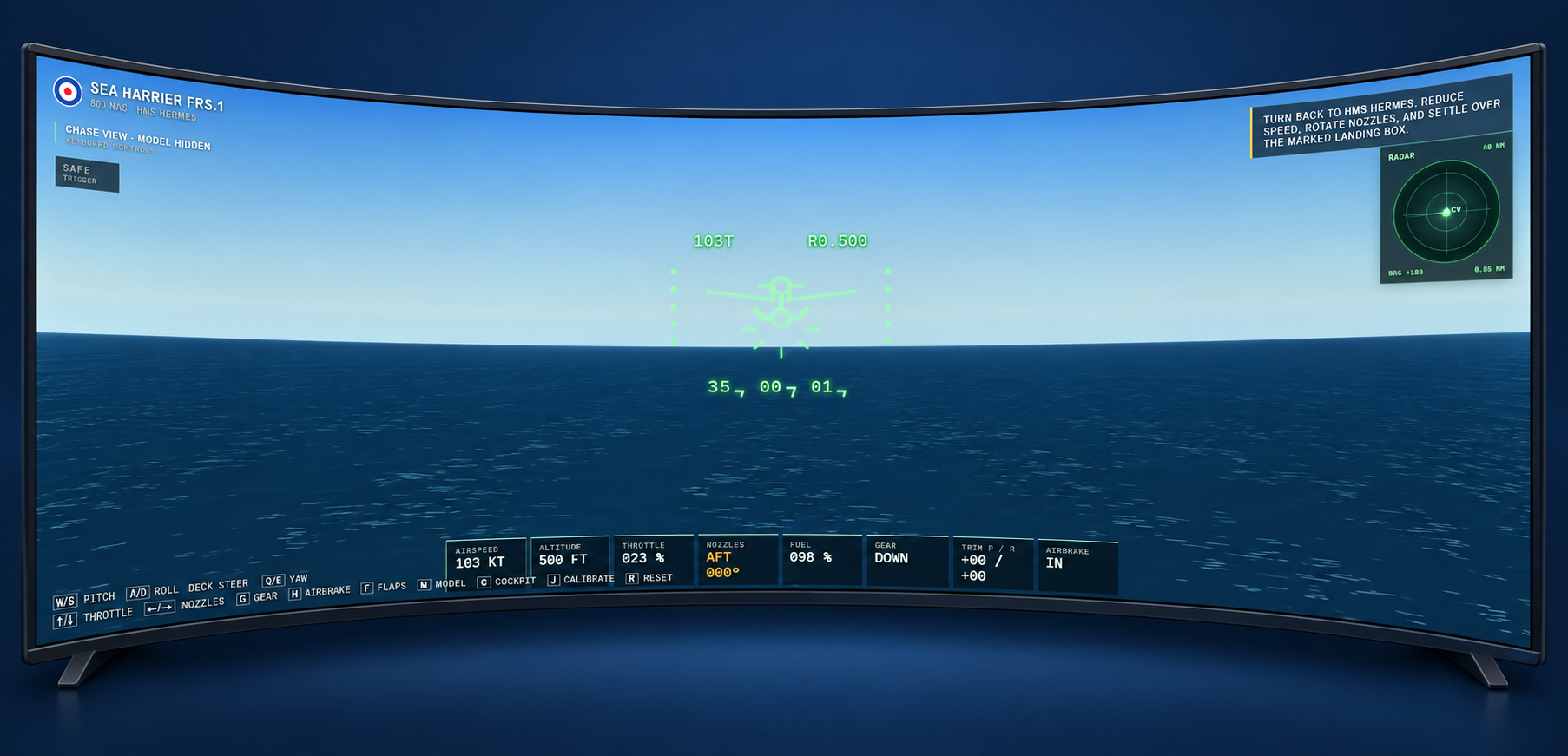
Sea Harrier prototype software shown on planned visual display
PROTOTYPE SOFTWARE IN DEVELOPMENT Visual system concept · final projection system under development
THE FIRST WORKING PIECES

Our prototype software, shown within a concept for the finished visual system.

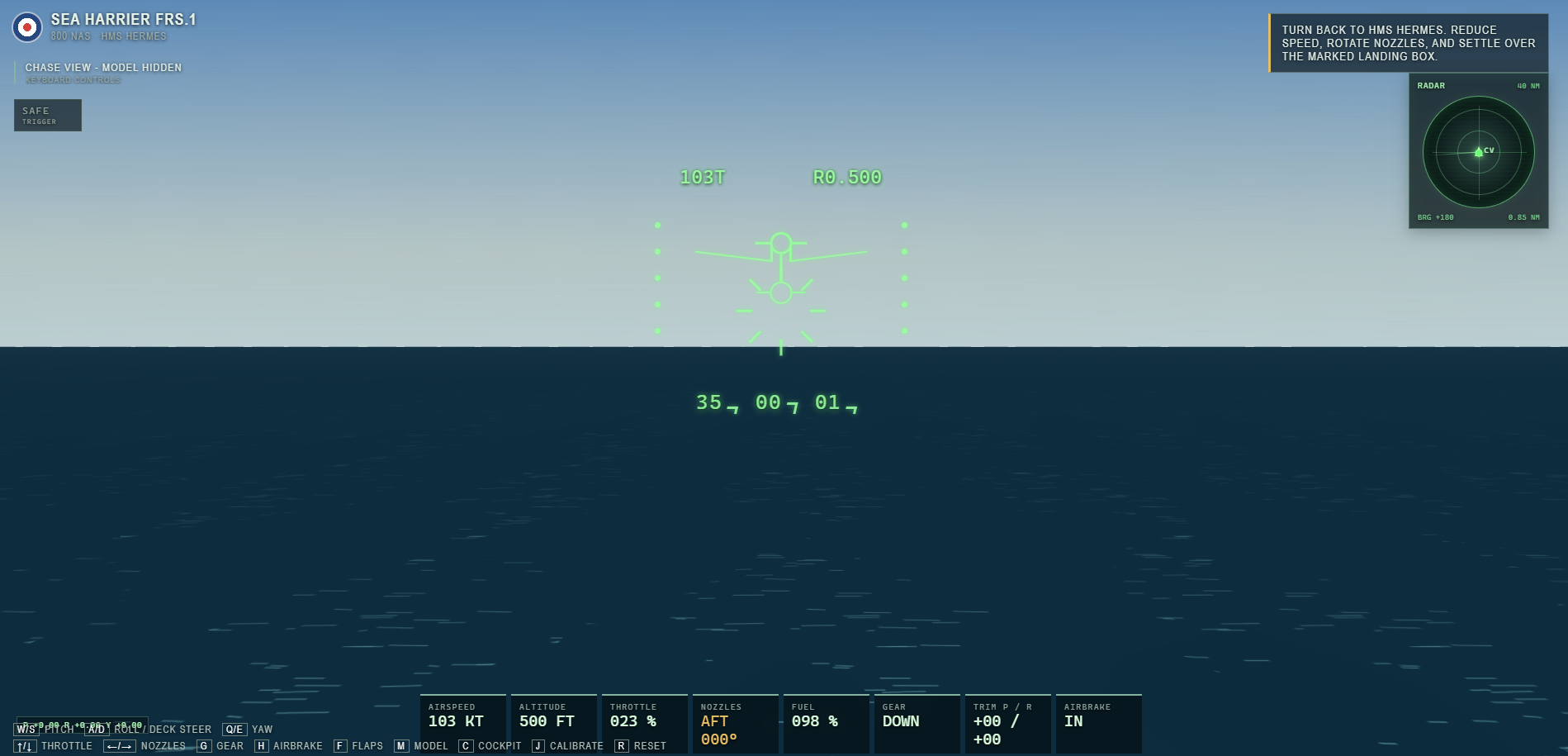
The simulator screenshot shown on the display is from our working prototype software. At this stage, flight controls, basic instrumentation and radar information are displayed on screen, allowing us to develop and test the aircraft physics, commands and system functions.

As the physical cockpit is built, these functions will move from on-screen controls to the simulator's physical controls, displays, switches and instrumentation.

The visual system shown here is a concept for the finished simulator. The software displayed on it is already in development.

LEARN MORE ABOUT WHAT WE'RE DEVELOPING →
BUILDING IT PIECE BY PIECE

FROM A SCREEN
TO AN AIRCRAFT.

Every stage adds another part of the physical experience. We're documenting that journey as it happens rather than pretending we're already at the finish line.

NOW

Flight software

MONTHS 0–12

Developing the aircraft environment, flight behaviour, HUD, radar, carrier and the software architecture that will ultimately connect to the physical cockpit.

IN DEVELOPMENT
PHASE ONE

Martin-Baker 10H seat

MONTHS 0–12

A full-scale replica establishes the pilot's position, eye line, relationship with the HUD and instrument panel, and the physical dimensions around which the cockpit develops.

PLANNED
PHASE TWO

Cockpit & flying controls

MONTHS 12–24

The full-size cockpit structure, control column, throttle, nozzle lever, switches and instrumentation move the project from software into a physical aircraft environment.

PLANNED
PHASE THREE

Projection & six-axis motion

MONTHS 24–30

The final visual system and six-degree-of-freedom motion platform bring the cockpit, software and physical systems together into the finished experience.

PLANNED
FOLLOW THE BUILD

THIS ISN'T
A FINISHED STORY.

As the project develops, this is where we'll show the real work: software, research, measurements, prototypes, printed parts, cockpit construction, testing, problems and solutions.

Sea Harrier prototype software
DEVELOPMENT / CURRENT

Building the software

Our prototype allows us to develop the physics, commands and system functions that will eventually connect to the simulator's physical controls, displays and instrumentation.

VIEW SOFTWARE DEVELOPMENT →
COCKPIT DEVELOPMENT
RESEARCH / NEXT

Building the cockpit

Research, measurements and structural references will turn the Sea Harrier cockpit into a full-scale physical environment.

COMING LATER
SEAT DEVELOPMENT
RESEARCH / NEXT

Building the 10H seat

A full-scale Martin-Baker 10H replica will establish the pilot position and key physical reference points for the cockpit.

COMING LATER
FINAL INTEGRATION
FUTURE DEVELOPMENT

Building the experience

Visuals, canopy, helmets, sound, instrumentation, motion and software will ultimately come together as one experience.

COMING LATER
HELPING US GET THE DETAILS RIGHT

BUILDING
ACCURACY INTO
EVERY STAGE.

We already have technical material and reference information that is helping shape the project, but recreating a Sea Harrier cockpit accurately requires a considerable amount of detail.

As the project progresses, we will reach out to companies, museums, organisations and individuals who may be able to help us confirm measurements, equipment, controls, systems and other details as we reach each stage of the build.

We don't need all of that information today. Much of it will become relevant as individual parts of the simulator move from software and research into physical development.

In the meantime, if you are in a position to contribute information, measurements, photographs, technical material or first-hand knowledge that could help the project, we'd be very pleased to hear from you.

CONTRIBUTE TO THE PROJECT →
INFORMATION THAT CAN HELP Aircraft & cockpit measurements

Reference dimensions and geometry from surviving Sea Harrier aircraft.

INFORMATION THAT CAN HELP Instruments, controls & systems

Details of original equipment, installation, operation and cockpit layout.

INFORMATION THAT CAN HELP First-hand experience

Knowledge from those who flew, maintained, supported or worked directly with the Sea Harrier.

INFORMATION THAT CAN HELP Aircraft & collection access

Opportunities to photograph, examine or measure surviving aircraft, components and relevant material.

WHAT ALL OF THIS IS FOR

ONE DAY, THE FIRST STUDENT
WILL CLIMB ABOARD.

They may arrive interested in aircraft. They may know nothing about engineering. They may never have considered programming, electronics or aviation as something they could do.

Then the canopy closes.

If they climb out wanting to know how something worked, why the aircraft behaved the way it did, how an instrument was programmed or how the machine was built, the simulator has done what we built it to do.

MAKE CONTACT

HELP BUILD
WHAT COMES
NEXT.

Whether you can help with sponsorship, aircraft information, measurements, technical knowledge or a museum/STEM partnership, we'd like to hear from you.

Or, if you simply want to know more about what we're doing, why not get in touch?

hello@seaharriersimulator.co.uk

Nothing is sent automatically. Your email application will open with the enquiry ready for you to send.